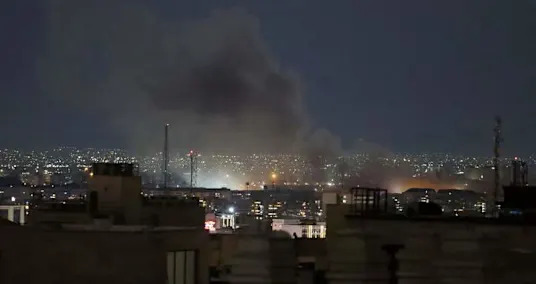
Protests took place in Tel Aviv, Jerusalem, Haifa, and Beersheba, as a survey found broad but uneven support among Jewish Israelis for Operation Roaring Lion.
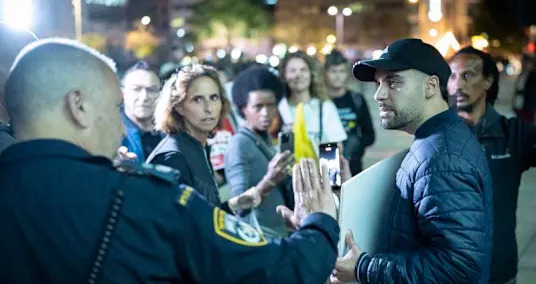
Israel Police arrested 21 anti-war protesters Saturday night as demonstrations against the conflict with Iran expanded in multiple cities despite restrictions on public gatherings.
Protests took place in Tel Aviv, Jerusalem, Haifa, and Beersheba, with hundreds of participants reported in Tel Aviv and Jerusalem and about 100 in Haifa, marking the largest turnout since weekly demonstrations began. Authorities said 13 people were arrested in Tel Aviv and eight in Haifa.
Police said the gatherings were not approved under Home Front Command regulations that ban events with more than 50 people. Officials said the increase in turnout followed calls by groups opposing the government to protest despite the restrictions.
“During a situation assessment that took place at the scene with a Home Front Command representative… it was clarified that there was a real risk to human life and accordingly, Yarkon [precinct] police commander Tzachi Sharabi ordered the gathering to be dispersed,” police said.
Hadash-Ta’al chairman Ayman Odeh, an Arab lawmaker involved in the protests, criticized the police response, calling officers fascists “in the service of the government” and saying they were afraid of “the heroic citizens who went out, despite everything, to make their voice heard.”

Survey shows broad, uneven support for war
The demonstrations come as a March 2026 survey by the Israel Democracy Institute found broad but uneven support among Jewish Israelis for Operation Roaring Lion. Support was strongest on the Right at 87% and about half on the Left.
The survey also found that Jewish and Arab respondents largely agreed that Iran’s resilience has been stronger than expected. Most Jewish respondents said Israeli society could sustain the campaign for up to one month, while 28% said as long as needed. Arab respondents were less optimistic about how long the public could endure the conflict.
A majority of Jewish respondents said Prime Minister Benjamin Netanyahu’s decision was driven by security considerations, while most Arab respondents viewed it as political.
latest_posts
- 1
 Bruno Mars tour 2026: How to get tickets for 'The Romantic Tour,' presale times, prices and more
 - 2I thought I knew the night sky, but what I saw from the Canary Islands left me speechless
- 3Artemis 2 moon astronauts will try to recreate Apollo 8's historic 'Earthrise' photo during April 6 flyby
- 4Qatar, Ireland accuse Israel of using chemical weapons on Palestinians, demand watchdog probe use
- 56 U.S. States for Climbing





- They died 'doing what they loved': The stories of workers in their 80s who died on the job
- Surging measles cases are 'fire alarm' warning that other diseases could be next
- Criminal Guard Lawyer Expenses: What Would it be advisable for you to Hope to Pay?
- Mystery foot suggests a second early human relative lived alongside Lucy
- 'Stranger Things' star debunks claims of 'unseen footage' from Season 5, Volume 2 as backlash intensifies ahead of the series finale
- Orcas seen hunting great white sharks to eat their livers in drone footage recorded in Mexico
- Step by step instructions to Show Children the Significance of Appropriate Handshaking
- Record-breaking 'space laser' erupts from merging galaxies 8 billion light-years away
- IDF strikes Tehran command centers, weapon production sites